

Transfer boxes / crates for beverages like beer and soda, storage boxes for tableware like dishes in the catering industry, turnover boxes for loose items in the logistics industry, shopping boxes used in the retail industry, and plastic crates for fruit are all types of containers that are closely related to people's lives. Generally speaking, when carrying heavy items, the box's surface is reinforced with slats of varying thicknesses. When carrying lighter items, the surface can feature a flat, mesh-like, hollowed-out structure.
Plastic boxes are often printed with logos to reflect the company's brand value. Logo printing can be done in a variety of ways: pad printing machine , silk screen printing machine , hot stamping machine, and thermal transfer machine. Silk screen printing machine is the most common process. Silk screen printers are best suited for boxes with a solid surface or for areas larger than 200 x 300 mm. Standard flat screen printers can print on boxes. If printing is required on different sides of the box, different fixtures can be used. Fixtures with a rotating function can be set to different angles to accommodate various box types.
1) Clamp-Fixed Flat Screen Printer
The most traditional flat screen printer uses a clamp to hold the box with the printing surface facing up. Generally, one side can be printed at a time. If the same pattern needs to be printed on the other side of the box, the box can be flipped over manually.
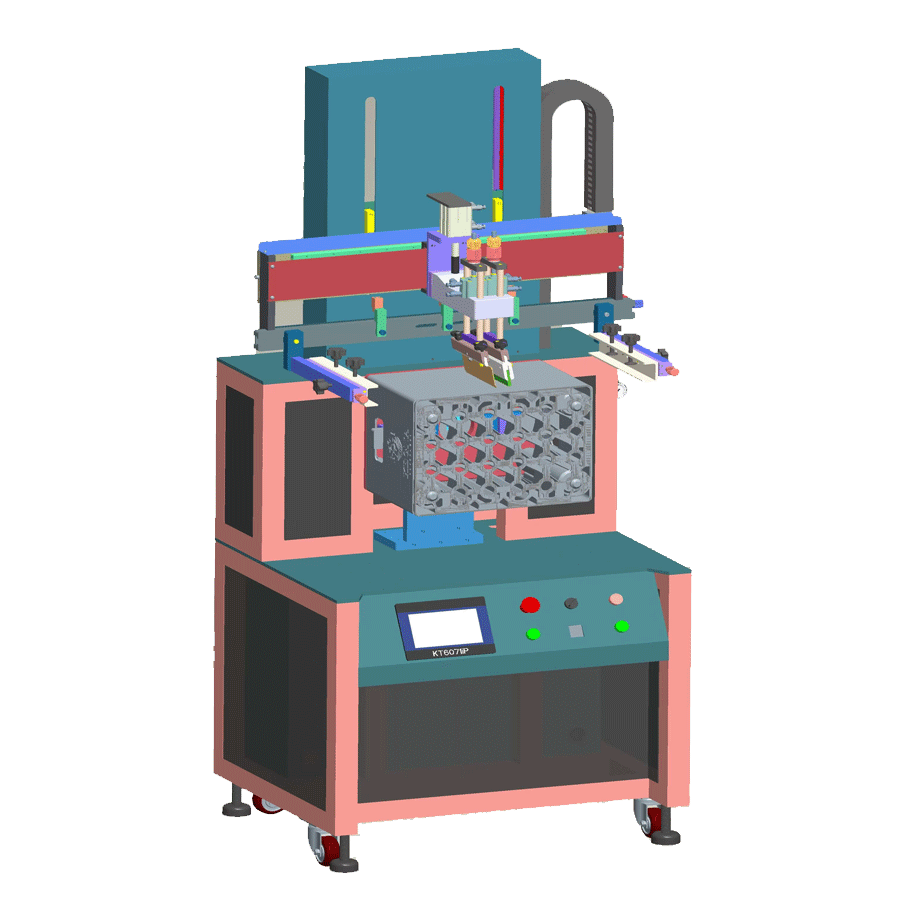
2) Rotating Clamp-Fixed Flat Screen Printer
If the clamp can automatically rotate 180 degrees, a flat screen printer can print the same pattern on two opposite sides at once. This is a popular option for small businesses. Flat screen printers with fixed fixtures and rotating fixtures have lower precision requirements and can be controlled by pneumatic or motorized systems. Servo motors significantly improve printing accuracy.
3) Flat screen printer with shuttle table
Many boxes may require two colors on the same side. Using a shuttle table to switch the box's position and two screen printing heads arranged side by side above the table creates a two-color shuttle box screen printer, allowing two colors to be printed simultaneously on the box's surface. To prevent color registration issues, UV ink is recommended to prevent the ink from drying completely before the second color is printed. The machine should also be equipped with a UV curing device.
4) Rotating fixture with shuttle table
Most boxes are rectangular and require the same pattern to be printed on two opposing sides. This also requires a rotating fixture. First, print the first color on the first side of the box, then move the box and perform UV treatment. Then, move the box to the second position to print the second color, and then perform UV treatment. The box is flipped 180 degrees and the process is repeated again. This allows a single screen printer to print two colors on two opposing sides of a box.
Screen printers with rotating fixtures reduce labor intensity, but production efficiency is not significantly improved because one product must be printed before the next. To achieve continuous printing, screen printers can be designed as assembly lines.
5) Assembly Line Screen Printing Machines
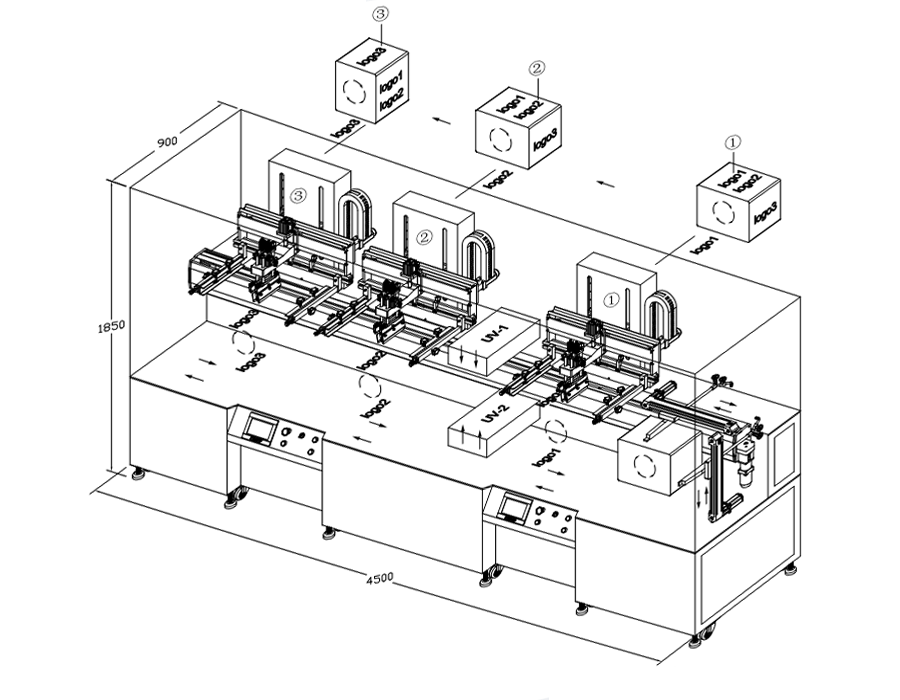
After printing one side, the fixture carrying the box moves forward, rotates, and then continues printing on the next side, creating an assembly line-like operation. If equipped with a flame treatment unit and a liftable UV curing unit, the screen printer can print two colors on all four sides of a box simultaneously, significantly improving production efficiency. However, assembly line screen printers are long and complex, making them suitable for large logistics companies or beverage manufacturers.
