

1. What is a Roll-to-Roll Screen Printing Machine?
A Roll-to-Roll (R2R) Screen Printing Machine is a specialized screen printing device designed for printing on continuous roll materials, such as films, paper, metal foils, fabrics, and other flexible substrates.
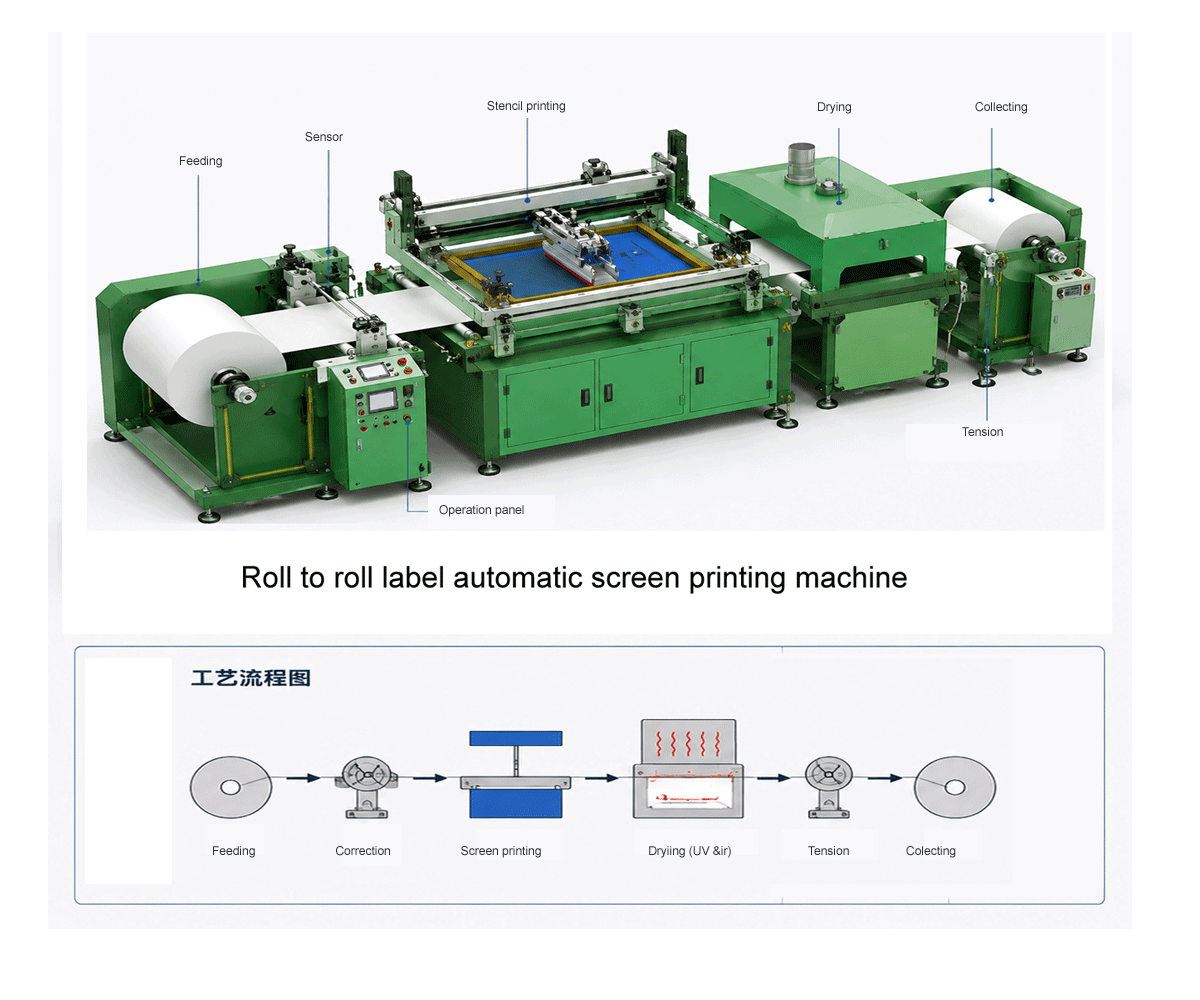
Key Features:
Continuous Operation: Feeds material from an unwind roll, passes it through the printing area, and rewinds it, enabling high-speed continuous printing.
Wide Applications: Commonly used in:
Electronics (PCB, solar cells, flexible circuit boards)
Labels and packaging materials
Thin-film solar energy devices
Touch screens
Webbing, ribbons, fabric strips, belts
Other flexible materials
2. Types of Roll-to-Roll Screen Printing Machines
Roll-to-roll machines are generally classified based on how the material is fed:
Vacuum Table Roll-to-Roll Machines:
Used for paper, film, flexible materials, and thin metal plates.
Can be equipped with IR drying or UV curing systems.
Designed for narrow-width products such as webbing, ribbons, and fabric strips.
Typically use IR tunnel drying systems.
3. Structure of Roll-to-Roll Screen Printing Machines
The machine consists of several main modules:
- Unwinding Section:
Function: Holds the raw material roll, controls tension, and ensures smooth feeding.
- Screen Printing Section:
Function: Performs the actual printing process.
Technology: Modern systems use servo motors for precise control.
- Drying/Curing Section:
Function: Dries or cures ink to ensure high print quality.
Types: Hot air drying, infrared (IR) drying, or UV curing.
- Rewinding Section:
Function: Rewinds the printed roll while controlling tension to prevent deformation.
Key Components: Rewinding shaft, tension controller, meter counter.
- Auxiliary Systems:
Tension Control: Keeps the material neither too loose nor too tight.
Alignment/Correction System: Ensures accuracy for multi-color or repeated printing.
Operation Control System: PLC or touchscreen interface for controlling speed, printing pressure, and drying/curing parameters.
